
Our Technology -iTAP-
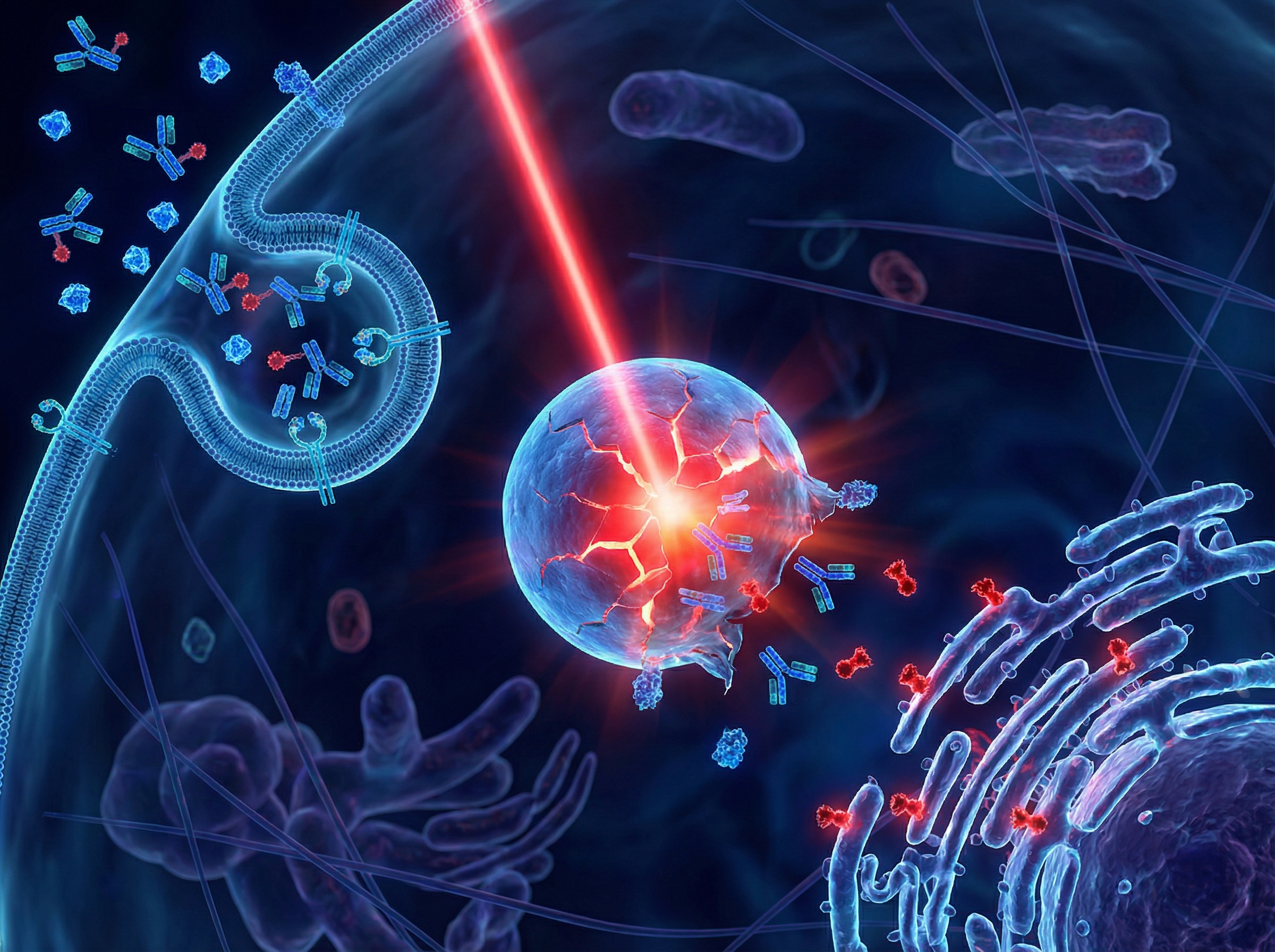
iTAP (intelligent Targeted Antibody Phototherapy) is a next‑generation platform that integrates the principles of photodynamic therapy (PDT) into conventional immunotoxins to dramatically enhance endosomal escape. This significantly improves cytosolic delivery, enabling strong pharmacological effects even at low doses. As a result, iTAP has the potential to reduce adverse events while expanding the range of treatable diseases.
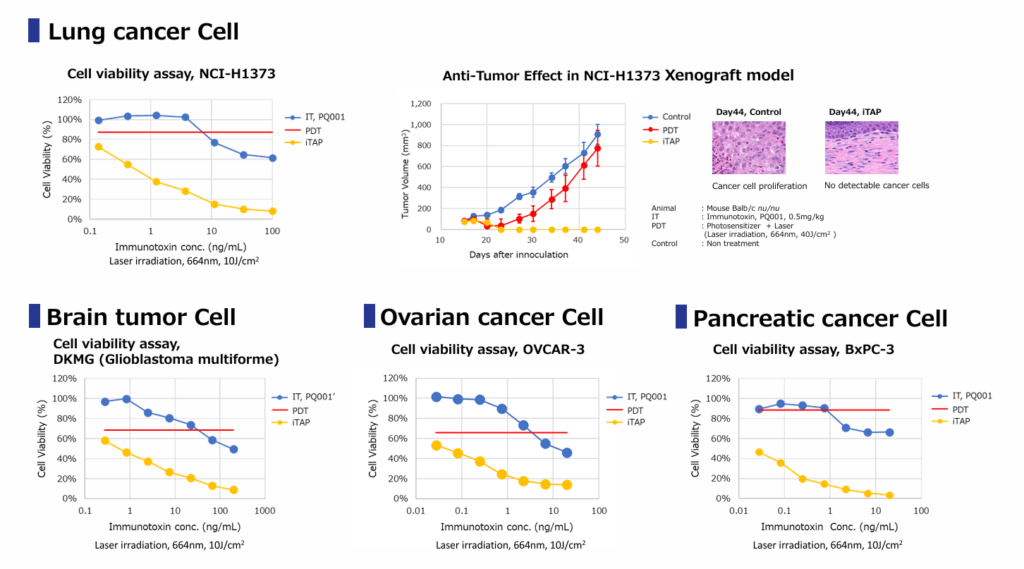
Design Principles of iTAP
1. High targeting precision:
The antibody–saporin conjugate selectively accumulates in target cells through its high molecular specificity.
2. Spatiotemporally controlled activation:
Laser stimulation based on photodynamic therapy (PDT) principles triggers localized and timely endosomal escape within target cells.
3. Potent efficacy at low doses:
Enhanced cytosolic delivery enables strong therapeutic effects with reduced dosing, helping to minimize adverse signals.
The iTAP approach offers broad applicability, including tumors with medium‑to‑low antigen expression and hard‑to‑treat solid tumors where intracellular trafficking has been a major bottleneck.
Mechanism of iTAP
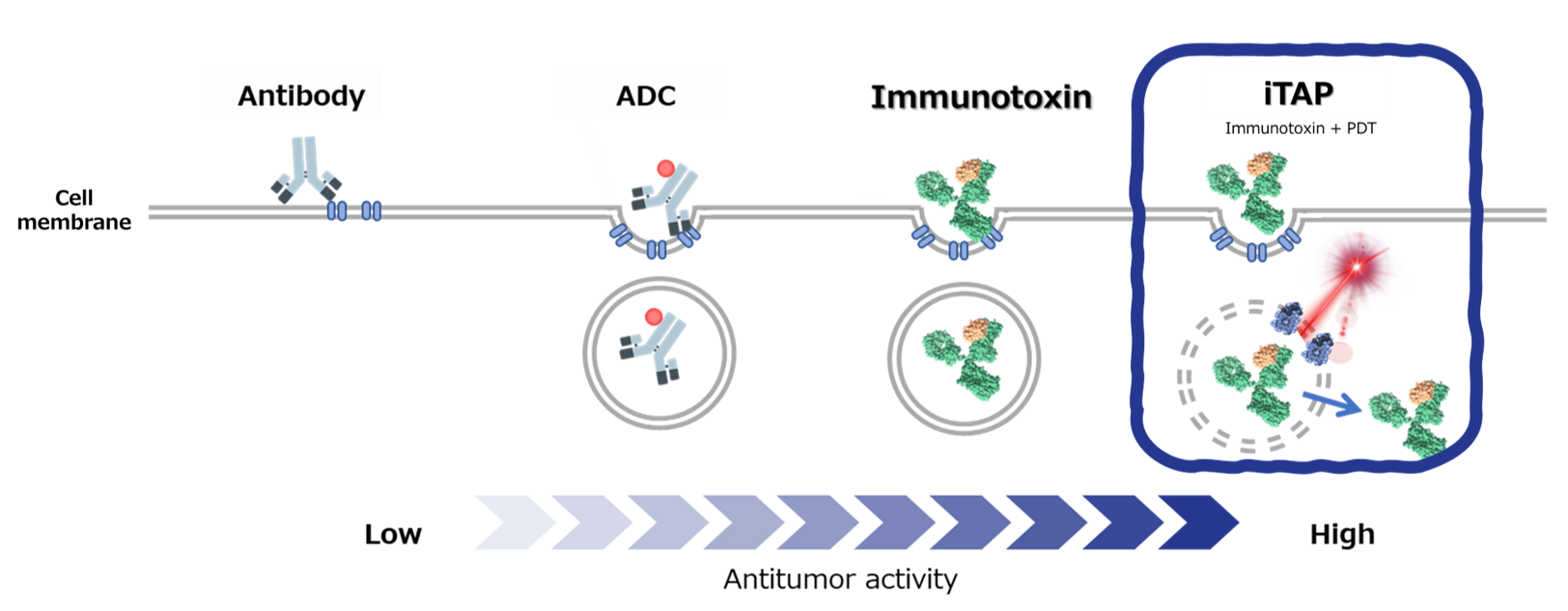
The iTAP method is a technology designed to maximize the cytotoxic activity of saporin by specifically enhancing endosomal escape, the major rate‑limiting step that occurs after an immunotoxin is internalized into the cell and becomes trapped in endosomes.
After binding to its target antigen, an immunotoxin is taken up into the cell via receptor‑mediated endocytosis. However, in conventional immunotoxins, the majority of molecules remain sequestered within endosomes and are subsequently trafficked to lysosomes for degradation. As a result, only a small fraction reaches the cytosol, leading to insufficient pharmacological activity—this is a fundamental bottleneck of traditional immunotoxin approaches.
iTAP addresses this limitation by incorporating light‑activated photodynamic therapy (PDT) to efficiently disrupt endosomal membranes within target cells. This enables the saporin payload to escape into the cytosol much more effectively, allowing potent cytotoxic activity to be achieved at significantly lower doses.
Furthermore, because this enhancement of endosomal escape is a form of target‑independent intracellular delivery improvement, the iTAP platform expands therapeutic applicability to tumors with low antigen expression and to otherwise difficult‑to‑treat solid tumors where intracellular trafficking has been a limiting factor—even when antibody internalization itself is adequate.
* About PDT (Photodynamic Therapy)
Photodynamic therapy (PDT) is a treatment modality that uses a photosensitizer activated by light of a specific wavelength to generate reactive oxygen species (ROS) through reactions with molecular oxygen. These ROS selectively destroy targeted cells. Because photosensitizers preferentially accumulate in abnormal tissues such as tumors, and because light exposure can be precisely confined to the intended area, PDT offers inherently high target selectivity.
PDT has already been clinically applied to a range of cancers—including skin, head and neck, lung, and bladder cancers—as well as premalignant conditions such as actinic keratosis. Its safety and therapeutic efficacy are well established, with a substantial body of clinical evidence supporting its use.
PhotoQ3 leverages the proven therapeutic concept of PDT not for direct tumor ablation, but rather as a means to enhance intracellular delivery. By integrating light‑activated PDT mechanisms into the iTAP platform, we enable efficient endosomal disruption within target cells and thereby facilitate cytosolic delivery of the saporin payload.