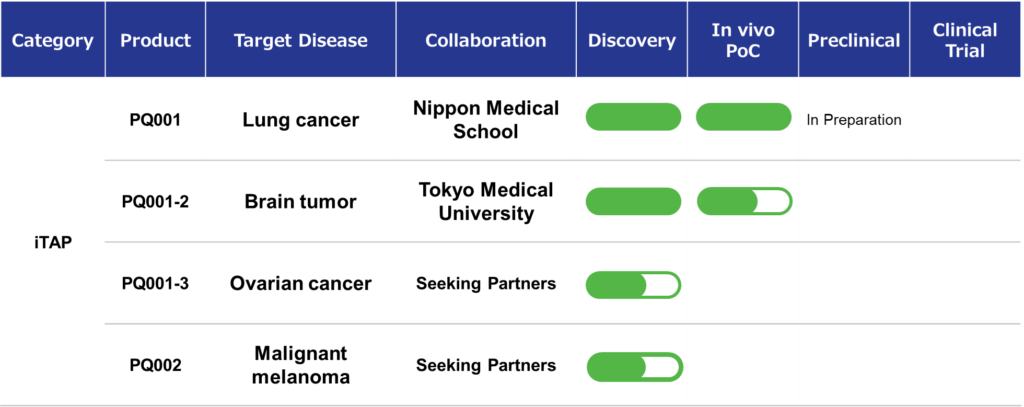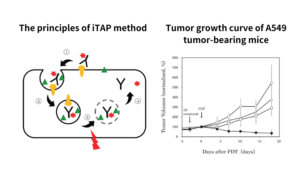




Pipeline

Our Therapeutic Vision
iTAP overcomes the fundamental limitation of conventional immunotoxins—their poor endosomal escape efficiency—by dramatically increasing the amount of payload that reaches the cytosol of target cells. This enhanced intracellular delivery enables robust cytotoxic activity at markedly lower doses. By improving this core mechanism, iTAP broadens the therapeutic potential beyond what has been achievable with traditional antibody therapeutics, ADCs, or immunotoxins, particularly in refractory tumor types where these modalities have shown limited efficacy.
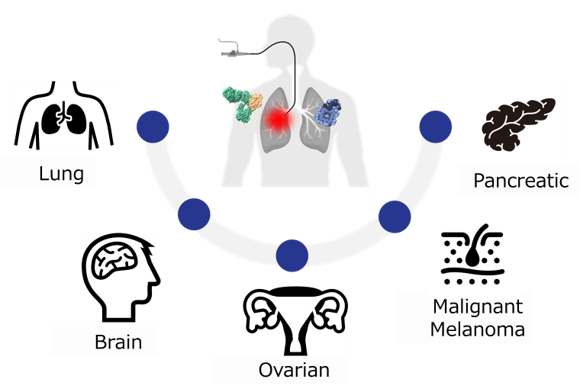
We are focusing our development efforts on tumor areas where iTAP’s mechanism offers the greatest advantage, including:
1. Lung cancer
Lung cancer represents a major disease area with approximately 130,000 new cases annually in Japan, and the need for non‑surgical or surgery‑sparing treatments is increasing as the population ages. Current PDT usage remains limited to roughly 300 cases per year, leaving a substantial unmet clinical need.
iTAP offers a platform capable of achieving what conventional technologies could not: minimally invasive, highly effective, and highly selective tumor control. This makes iTAP particularly attractive as a therapeutic option for elderly patients and those with significant comorbidities who cannot undergo surgery.
Furthermore, PhotoQ3’s collaborative research with Nippon Medical School in the lung cancer field ensures that iTAP development is closely aligned with clinical practice, supporting both real‑world implementability and early market adoption.
2. Malignant brain tumors
Brain tumors represent one of the most critical “unmet medical needs,” with very limited effective treatment options. Glioblastoma, in particular, shows high recurrence rates after standard therapy, and poor cytosolic drug delivery is a major barrier to therapeutic success.
By dramatically enhancing endosomal escape, iTAP enables strong antitumor activity at low doses, while minimizing impact on surrounding normal brain tissue. This profile aligns well with the increasing demand for minimally invasive, high‑precision treatments in an aging population.
Given these characteristics, malignant brain tumors represent one of the most promising areas where the iTAP platform can deliver significant clinical value.
3. Ovarian cancer
Ovarian cancer is often diagnosed at an advanced stage, and even standard therapies exhibit high recurrence rates, leading to major unmet needs related to drug resistance and residual disease. By greatly improving cytosolic delivery, iTAP enables potent activity against microscopic lesions and tumors with heterogeneous antigen expression, achieving “high efficacy at low dose.”
The modality is also highly compatible with PDT‑based light activation within the peritoneal cavity, making ovarian cancer a clinically and commercially attractive indication for the iTAP platform.
Development Stage (as of February 2026)