



About Saporin
Saporin is a potent 30‑kDa toxic protein found in the seeds of Saponaria officinalis (common soapwort). It belongs to the Type I family of ribosome‑inactivating proteins (RIPs), a class of plant-derived toxins that irreversibly inhibit ribosomal function.
Characteristics and Function of Saporin
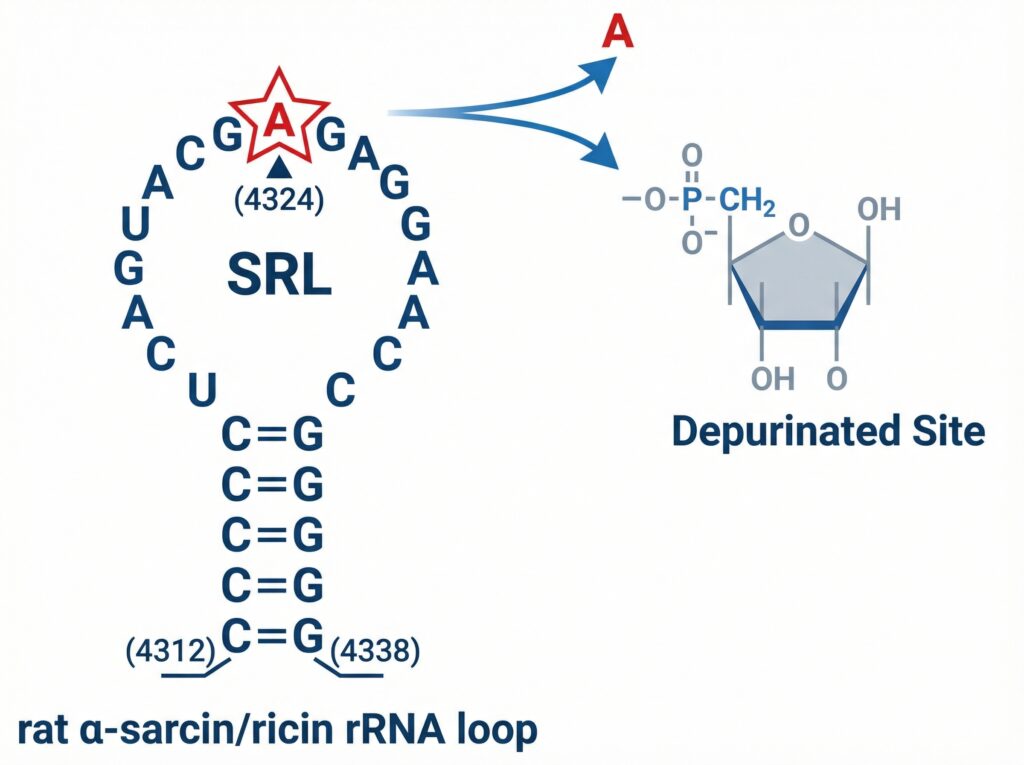
Saporin inhibits protein synthesis by removing (depurinating) a specific adenine residue from the 28S rRNA within the ribosome.
Saporin is classified as a Type I ribosome‑inactivating protein (RIP), characterized by its simple structure and the absence of a binding domain (the B‑chain) required for autonomous cellular entry.
Because of this, it exhibits relatively low nonspecific cytotoxicity and can be freely conjugated with various targeting molecules depending on the application. This makes saporin a highly versatile and easy‑to‑handle toxin in research settings.
In particular, when saporin is conjugated to antibodies that recognize specific target molecules, the resulting complexes are known as immunotoxins. These antibody–toxin conjugates are widely used in drug discovery, as well as in cancer and immunology research.
Research Applications of Saporin
- Development as a Component for Therapeutic Candidates
Because saporin on its own has limited ability to enter cells, it is typically conjugated to antibodies or peptides that recognize specific cell types. This enables selective elimination of target cells—such as cancer cells or defined neuronal populations—by delivering saporin specifically to those cells. - Reagent for Evaluating Antibody Internalization Efficiency
Saporin is also used as a functional readout to assess how efficiently an antibody is internalized into cells. When conjugated to saporin, internalizing antibodies induce cytotoxicity, allowing researchers to quantitatively evaluate internalization capability.
Cytotoxic Mechanism of Immunotoxins & Their Limitations
Technical Barriers in Immunotoxin Development
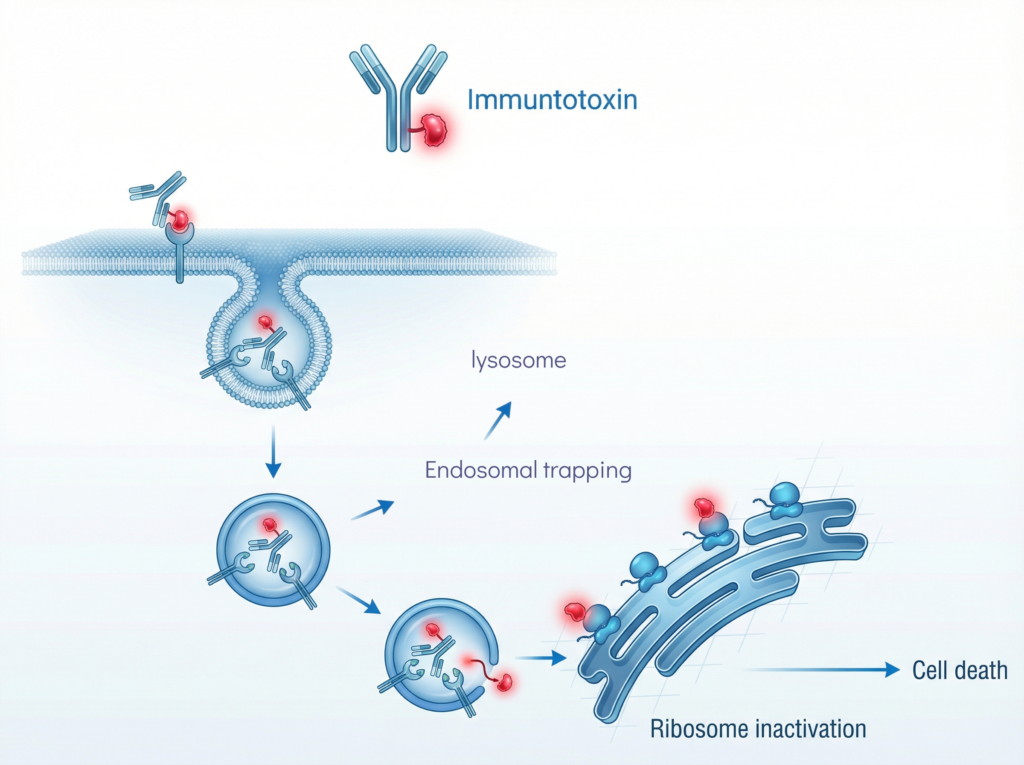
A well‑known challenge of conventional immunotoxins is their extremely low efficiency of endosomal escape after cellular internalization. Because only a minute fraction of the internalized toxin reaches the cytosol, the potent cytotoxic activity of saporin cannot be fully exerted.
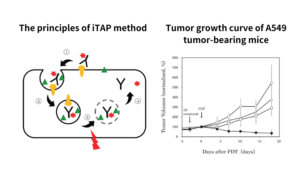
To overcome this fundamental limitation, PhotoQ3 has developed iTAP (intelligent Targeted Antibody Phototherapy), a technology designed to actively promote endosomal escape. By enhancing the cytosolic delivery of saporin, iTAP offers a new approach that dramatically improves the efficacy of immunotoxin‑based therapies.
PhotoQ3’s Saporin Manufacturing Technology
Because of its potent cytotoxicity, saporin has historically been extremely difficult to produce recombinantly in a stable and scalable manner.
PhotoQ3 has overcome this bottleneck through its proprietary expression technologies, establishing a robust production platform capable of generating high‑quality saporin suitable for therapeutic applications.